

If your pet’s spay surgery is coming up, you may be carrying more stress than you expected. You know spaying is routine, but “routine” feels different when it is your dog or cat on the table. You want less pain, a smooth recovery, and clear answers about what actually happens during surgery. That is usually where laparoscopic spay procedures come into the conversation at a pet hospital in Mississauga, ON.
A laparoscopic spay is a minimally invasive way to remove the ovaries, and in some cases related reproductive tissue, through small incisions using a camera and specialized instruments. Veterinary hospitals use this method to reduce tissue handling and post operative discomfort for many patients. It is still surgery, still requires anesthesia, and still needs skill, equipment, and planning. The difference is how the procedure is performed and how that can affect recovery.
Veterinary hospitals use laparoscopic surgery to reduce trauma during spay procedures
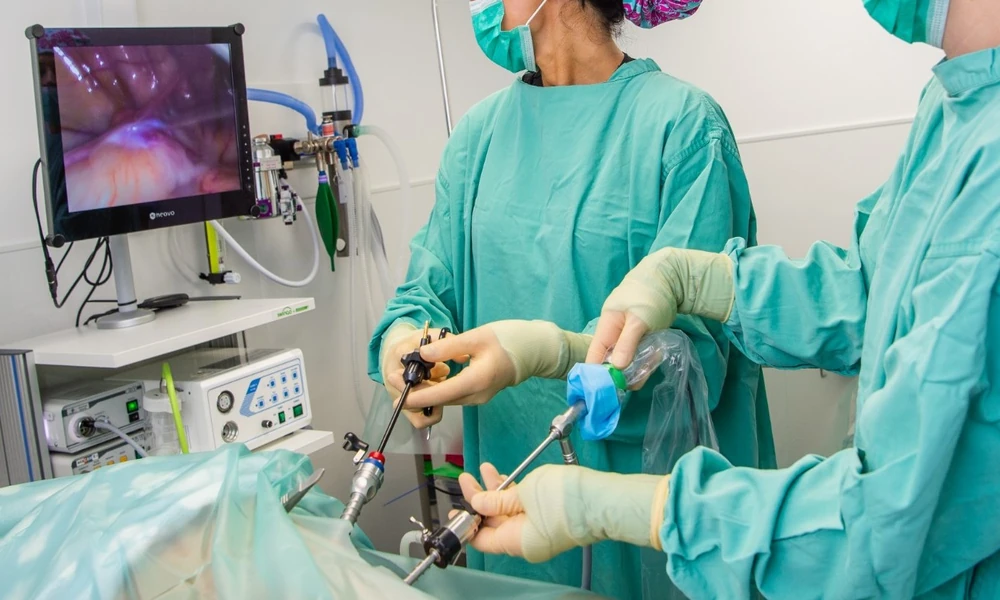
In a traditional spay, the surgeon makes a larger abdominal incision to reach the reproductive organs directly. In a minimally invasive spay surgery, the veterinary team works through one to three small openings. A tiny camera called a laparoscope goes into the abdomen, sending magnified images to a monitor. This lets the surgeon see the ovaries and surrounding structures clearly without opening a large area.
Carbon dioxide gas is used to gently inflate the abdomen so there is room to work. The surgeon then inserts slender instruments through the other ports, seals and cuts the tissue around the ovaries, and removes them through the small incisions. In many veterinary hospitals, this is an ovariectomy, which removes the ovaries and prevents heat cycles and pregnancy. Some cases call for a different approach depending on age, anatomy, or medical history.
This sounds high tech because it is, but the goal is simple. Less pulling on tissue often means less pain after surgery. For a pet owner, that can mean a dog who is more comfortable getting up that evening, or a cat who returns to normal behavior sooner than expected.
The surgical process depends on training, equipment, and patient selection
Not every Animal Hospital offers laparoscopic spay procedures. The technique requires specialized tools, staff training, and experience with minimally invasive surgery. Veterinary teaching hospitals and referral centers often describe these services in detail, including the use of advanced imaging and soft tissue surgical support. You can see examples from Cornell University’s soft tissue surgery service, Michigan State’s minimally invasive surgery program, and the University of Tennessee’s minimally invasive procedures service.
Patient selection matters. A healthy young dog may be an excellent candidate. A very small patient, a pet with unusual anatomy, or an animal with another abdominal condition may need a different plan. Some hospitals also recommend laparoscopic surgery more often for larger breed dogs because the benefits of smaller incisions can be especially helpful when a standard incision would otherwise be longer.
That is where a lot of owners get stuck. You hear “less invasive” and assume it is always the better choice. Sometimes it is. Sometimes the safest surgery is the one your surgeon performs most confidently and your pet can tolerate best. The right question is not which method sounds newer. It is which method fits your pet’s body, health, and risk profile.
Laparoscopic spay procedures can change recovery, cost, and expectations
The biggest reason many owners ask for a laparoscopic spay is recovery. Smaller incisions usually mean less soreness at the body wall. Many pets still need restricted activity, pain medication, and monitoring, but owners often report easier movement and less obvious discomfort in the first few days.
Cost is the part no one likes to be surprised by. A laparoscopic spay often costs more than a standard spay because the hospital has invested in equipment, maintenance, training, and longer surgical setup. If your budget is tight, that difference can feel frustrating. It helps to frame the choice honestly. You are not choosing between “good care” and “better care.” You are comparing two accepted surgical methods with different tools, recovery patterns, and price points.
You also need realistic expectations. A lap spay for pets does not erase all risk. Your pet still needs anesthesia, preoperative testing when advised, sterile technique, and careful monitoring after discharge. Complications are uncommon, but they can include bleeding, reaction to anesthesia, incision issues, or the need to convert to an open procedure if visibility or anatomy makes that safer.
Comparing laparoscopic spay and traditional spay helps clarify the decision
| Factor | Laparoscopic Spay | Traditional Spay |
|---|---|---|
| Incision size | Usually one to three small incisions | Usually one larger abdominal incision |
| Visualization | Camera magnification on a monitor | Direct surgical view through incision |
| Tissue handling | Often less traction on tissues | More manual exposure of organs |
| Post operative discomfort | Often less in appropriate candidates | Can be greater due to larger incision |
| Recovery activity limits | Still required | Still required |
| Availability | Limited to hospitals with equipment and trained surgeons | Widely available |
| Cost | Usually higher | Usually lower |
For many owners, the table makes one thing clear. This is not only a medical choice. It is also a practical one. If your pet is active, large, and likely to struggle with post operative soreness, the extra cost may feel worth it. If your local hospital does not offer veterinary laparoscopic surgery, or your pet is better suited to a standard approach, a traditional spay can still be a strong and responsible decision.
Clear next steps make the surgery decision easier
Ask what procedure your pet is actually getting. “Spay” is a broad term. Ask whether the hospital performs an ovariectomy or ovariohysterectomy, how many incisions are used, who performs the surgery, and whether conversion to open surgery is ever needed.
Request a full estimate and recovery plan. Get the price, what it includes, which pain medications go home, how long exercise restriction lasts, and what warning signs should prompt a call. That removes a lot of avoidable worry.
Focus on your pet’s fit, not trends. Ask why your pet is or is not a good candidate for a laparoscopic approach. Age, size, breed, heat status, and health history all matter more than marketing language.
You do not need to know every surgical detail to make a solid choice. You just need honest information, a hospital that explains its plan clearly, and a procedure that fits your pet. If your animal needs spay surgery, contact your Animal Hospital and ask whether laparoscopic spay procedures are available and appropriate for your pet.